
From Ancient Engineering to Nanotech: The Evolution of Surface Area in Science
Understanding surface area in science has shaped our perspective on the world, from ancient tools to nanotechnology. When I first studied how surfaces react, I realized how deeply this concept connects to everything: chemistry, biology, physics, and even nature. Whether it’s how elephants cool themselves or how engineers design heat sinks, the role of surface area never stops surprising me. Let’s explore how this field evolved from simple observation to one of the most advanced branches of materials science today.
Historical Development and Significance of Surface Science
The story of surface area in science begins long before modern instruments existed. Early thinkers noticed that reactions and physical behaviors often started at the boundaries, the surfaces of materials. What began as curiosity in nature and engineering slowly evolved into a distinct scientific discipline known as surface science.
As materials science advanced, scientists started examining how atoms arrange themselves at a material’s outer layer. They discovered surface reconstruction, such as the famous Si(111)-7×7 crystal structure, showing that surface atoms reorganize differently from those deep inside the material. This realization helped define the microstructure and nanostructure behavior that governs energy systems, biotechnology, and industrial chemistry today.
The historical growth of surface science paralleled the rise of vacuum technology and spectroscopy. With the introduction of ultra-high vacuum (UHV) systems in the 1960s, scientists could finally study clean surfaces under controlled conditions and measure atomic interactions with precision. Using LEED (Low-Energy Electron Diffraction), they mapped atomic symmetry on solid surfaces. AES (Auger Electron Spectroscopy) and XPS (X-ray Photoelectron Spectroscopy) enabled elemental analysis, revealing oxidation states and chemical composition at the atomic scale.
I’ve seen how these methods became the backbone of modern surface-sensitive techniques. During a research project, I observed how electron spectroscopy data could reveal subtle differences in surface coverage and contaminants, insights that traditional bulk analysis would completely miss. It was at that moment that I realized how surface measurement defines the accuracy of all scientific discovery at the molecular level.
By the 1970s and 1980s, surface science had grown into a powerful interdisciplinary field. It connected physics, chemistry, and engineering, allowing researchers to explore adsorption dynamics, chemical kinetics, and bonding structures with high precision. The emergence of surface physics and surface chemistry journals, along with professional societies like the American Vacuum Society, formalized the field’s academic and industrial importance.
These developments shaped how we study materials, energy conversion, and environmental processes. From thin films in semiconductor technology to porous catalysts in nanotechnology, every advancement traces back to the historical development of surface science, where observation, precision, and imagination met for the first time.
Emergence as a Distinct Field
Surface science emerged in the early 20th century. Scientists noticed that what happens at a surface often differs from what occurs inside a material. This was the foundation for understanding reaction rates, diffusion, and adsorption.
I still remember reading about Irving Langmuir, whose work on the Langmuir adsorption isotherm laid the groundwork for modern surface chemistry. He introduced the idea of a monolayer, a single layer of molecules on a surface, simple but revolutionary. This understanding shaped everything from catalysis to biochemistry.
As experiments advanced, researchers realized that controlling surface structure and composition could change how materials behaved. This led to the birth of surface physics, the study of how atoms, electrons, and crystal defects interact at the outer layer of a solid.
Foundational Work and Discoveries
Early scientists like Langmuir and other alchemists experimented with adsorption and reaction mechanisms long before modern instruments existed. Grinding solids into powder to increase surface area was an ancient trick to boost reaction efficiency, even if they didn’t know the theory behind it.
Later, LEED (Low-Energy Electron Diffraction) and XPS (X-ray Photoelectron Spectroscopy) gave researchers the ability to observe atomic-level imaging. These tools revealed that clean surfaces behave differently under controlled conditions.
I’ve always admired how precise these early experiments were, especially considering the limits of their tools. They transformed experimental physics into a field that could measure chemical composition, oxidation states, and even detect surface contaminants at the atomic scale.
Revolutionary Imaging Techniques
The invention of the STM (Scanning Tunneling Microscope) in 1981 and AFM (Atomic Force Microscopy) in 1986 changed everything. For the first time, we could see atoms. These instruments allowed sub-angstrom resolution, meaning scientists could visualize individual atoms in nanostructures and nanomaterials.
When I used AFM during my lab training, I was stunned by the morphology visible at the nanometer scale. It showed me how mechanical properties like texture and surface tension could vary dramatically depending on microstructure and chemical bonding.
These imaging tools also inspired the rise of quantum tunneling effect studies, allowing researchers to understand local electronic structure and energy transfer across metal surfaces. Without them, nanotechnology would still be a theory instead of a practice.
Technological Advancements Enabling Surface Science
The 1960s brought ultra-high vacuum (UHV) technology, allowing scientists to create and study clean surfaces at pressures below 10^-9 torr. It made detailed spectroscopy using AES (Auger Electron Spectroscopy) and LEED pattern analysis.
These systems made surface-sensitive techniques like elemental analysis, surface coverage measurement, and atomic manipulation more reliable. When I first worked with a vacuum chamber, the silence of it, no air, no noise, felt like staring into atomic perfection.
By combining engineering, chemistry, and physics, these advancements pushed surface science into its golden age.
Significance and Applications of Surface Science
The true importance of surface science lies in how it connects the microscopic world to real-world results. Understanding surface area in science allows us to explain how atoms, molecules, and materials behave when they meet the environment. Every technological leap, from nanotechnology and medicine to engineering and environmental science, depends on mastering what happens at surfaces.
In nature, these same principles explain photosynthesis, thermal regulation, and cellular exchange, showing how surface area-to-volume ratios guide the survival of organisms. From nanoparticles enhancing reaction efficiency to heat sinks managing thermal conductivity, surface science shapes both the natural and technological world around us.
Fundamental Understanding of Surfaces in Nature
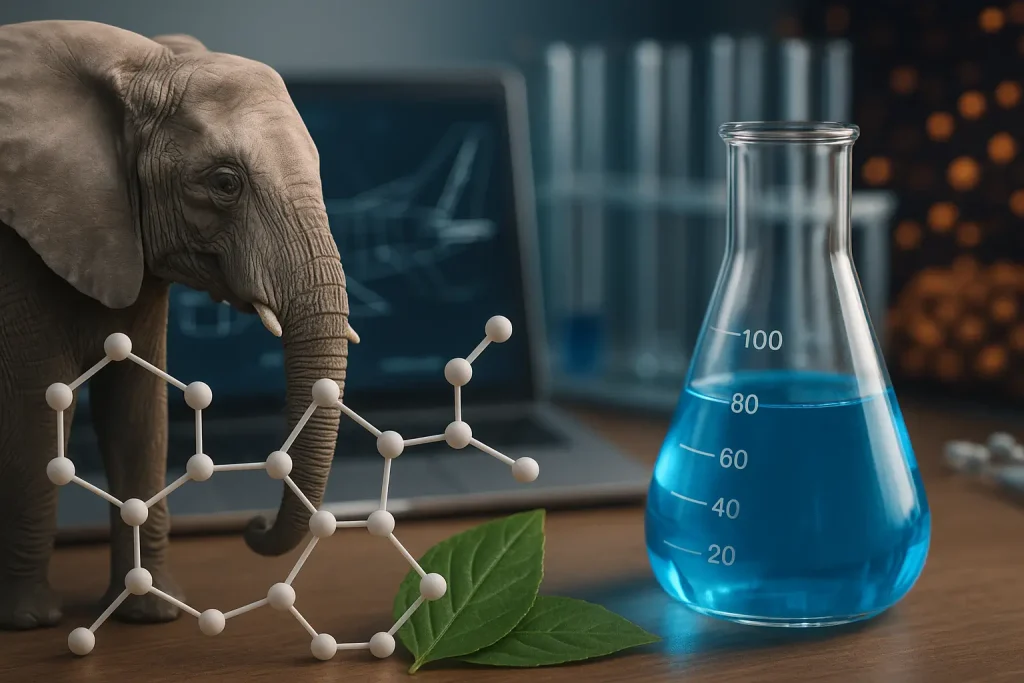
In nature, every organism uses surface area efficiently. Elephants fan their ears to manage thermal regulation, while small creatures rely on larger surface area-to-volume ratios for faster diffusion of oxygen and nutrients.
This same concept drives cellular exchange in biology and physiology. Single-celled organisms survive because their surface area allows efficient absorption and waste exchange. Nature, in many ways, was the first engineer to master surface optimization.
Technological Advancements and Modern Applications
Modern industries apply these same natural principles. In engineering, optimizing surface structure improves aerodynamics, fuel efficiency, and heat management. In medicine, calculating Body Surface Area (BSA) ensures precise chemotherapy dosing and patient safety.
I’ve seen how 3D imaging and computational chemistry now allow us to visualize molecular structures and electronic properties at the atomic scale. The surface energy manipulation behind catalysis optimization now powers cleaner energy systems and eco-sustainability.
From nanophotonic circuits to microfabrication, every technology depends on accurate measurement systems and scientific methodology built upon the principles of surface science.
Interdisciplinary Impact on Environmental and Biological Systems
The intersection of surface area in science with environmental studies changed how we approach sustainability. Environmental scientists use surface measurements to study pollutant dispersion, evaporation rates, and water purification.
In biological research, biosensing and nanostructuring allow early disease detection through precise surface reactions. These methods combine physics, chemistry, and biological understanding to address real-world challenges.
I believe this interdisciplinary collaboration is what truly defines modern science, where one discovery in surface technology can inspire breakthroughs across medicine, ecology, and engineering design improvement.
Role of Surface Area in Modern Scientific Innovations
Every major scientific innovation today depends on surface area. In nanotechnology, nanoparticles with high reactivity improve energy storage, biomedical applications, and chemical bonding control. In aerodynamics, wing shape optimization reduces drag and increases lift, making aircraft more fuel-efficient.
Even in computer processors, heat sinks use extended fins and thermal conductivity to prevent overheating. I’ve designed systems where increasing surface area by 30% improved cooling performance almost instantly.
In architecture, surface area calculations guide building materials, stone placement, and design efficiency, just like early engineers once did with castles and aqueducts.
Surface area in science continues to be one of the most influential concepts across industrial innovation, academic research, and technological revolution.
Related FAQs
What is the historical origin of surface science?
It began in the early 20th century through Langmuir’s adsorption theory and evolved with experimental physics and vacuum systems.
How did technological advancements shape the study of surface area?
Developments like STM, AFM, and XPS enabled atomic-level imaging, allowing precise measurement of surface structure and chemical composition.
What are the main differences between surface physics and surface chemistry?
Surface physics studies electrons and atoms, while surface chemistry focuses on adsorption, reaction sites, and molecular bonding.
Why is surface area important in modern technology and nature?
It affects heat transfer, diffusion, energy efficiency, and aerodynamics, from elephant ears to nanoparticles in reactors.
How has surface science influenced interdisciplinary research fields?
It has unified engineering, biology, chemistry, and physics, leading to innovations in biotechnology, nanophotonics, and environmental modeling.