
Understanding Surface Area in Engineering and Design: The Hidden Force Behind Every Structure
When I first started working in engineering, I underestimated how powerful surface area could be. Over time, I realized that everything from architecture to manufacturing depends on how well we understand it. The truth is, surface area in engineering defines how an object interacts with its environment, influencing heat transfer, fluid flow, material needs, and even energy efficiency. Once I saw how small design tweaks improved performance, I never looked at a structure the same way again.
Understanding the Role of Surface Area and Volume
Surface Area Definition
At its core, surface area is the measure of the outer surface of a 3-D object. It’s the sum of all the faces, bases, and total areas that make up a solid. In practical engineering, we don’t see it as just a formula; it’s a guide to understanding how shapes, dimensions, and materials behave under real-world conditions.
Whenever I design or test a prototype, I start with surface area measurement. Whether it’s cubes, prisms, cylinders, or spheres, I rely on formulas to visualize surfaces. Even a slight change in dimension can alter efficiency or strength. Once you grasp this concept, you start designing with precision instead of guessing.
From Shapes to Solids, Learning Beyond Formulas
In my early design days, I was focused only on equations. But surface area in engineering isn’t just about adding numbers. It’s about understanding how geometry interacts with function. A figure on paper transforms into a building, machine, or product in real life.
When we wrap, paint, or build, we apply surface area principles. It defines how much material we’ll need and how the design will look or perform. Every engineer eventually learns that surface area is the bridge between mathematics and real-world applications.
Surface Area-to-Volume Ratio in Daily Life
There’s one concept that changed how I think: the surface area-to-volume ratio. I’ve seen it control heat transfer, aerodynamics, and even biological processes. In thermal management, a larger surface area helps dissipate heat faster. That’s why fins on a heat sink are designed the way they are to retain or release heat as needed.
In fluid dynamics, more surface area means more drag, but it can also increase lift on a wing. As an engineer, balancing these forces is the art of design. It’s not about more or less area; it’s about the right area.
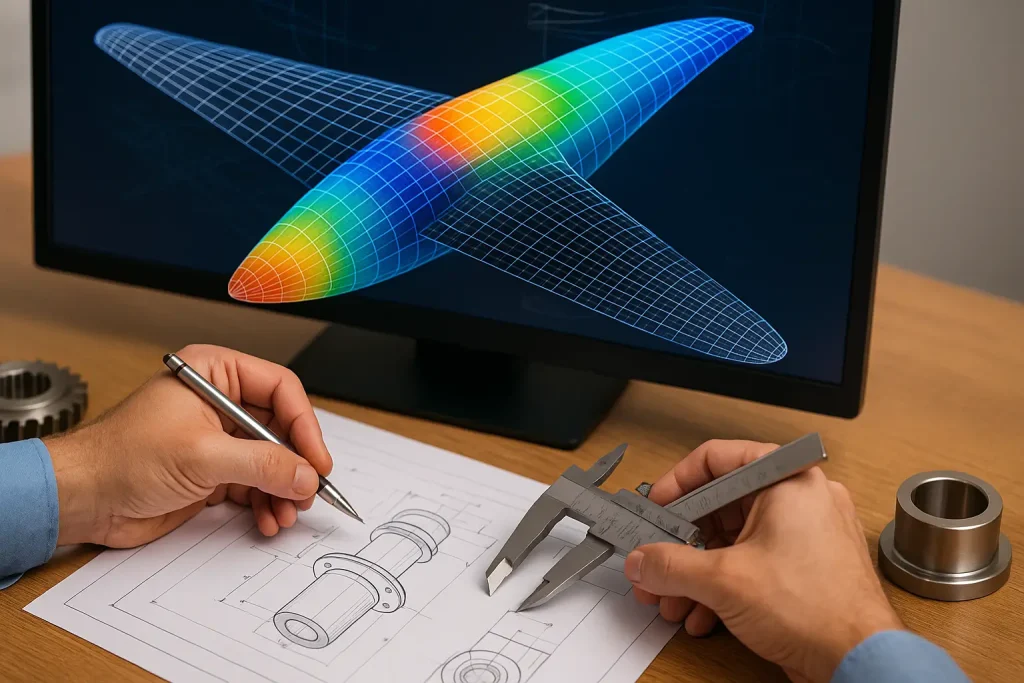
Real-Life Applications of Surface Area
In Architecture and Construction
Whenever I visit a construction site, I see surface area in action. In building construction, architects calculate it to estimate the quantity of materials like concrete, steel, and glass. A bridge, a water tank, or even a skyscraper starts with this understanding.
During one project, we designed a cylindrical tank. The right surface area ensured the volume held steady without leaking, while using minimal metal. It’s the unseen balance between safety, cost efficiency, and strength.
In Packaging and Manufacturing
I’ve worked with designers in manufacturing who treat surface area like gold. In packaging, it defines how to minimize waste and maintain product protection. Manufacturers in the food industry rely on it to control oxygen exposure and preserve freshness.
When I helped a client redesign perishable goods packaging, adjusting surface area reduced spoilage by nearly 20%. That’s the kind of efficiency optimization that pays off in every production process.
In Heat Transfer and Thermal Management
I’ve seen the beauty of surface area in engineering during heat transmission projects. Engineers use radiators, cooling systems, and heat sinks to move energy efficiently. Electronic components like microprocessors rely on thermal conductivity to prevent overheating.
By increasing surface area, we allow more heat dissipation, improving energy systems and extending the life of machinery. That’s the secret of energy conservation, understanding how much surface your system needs to breathe.
In Fluid Dynamics and Aerodynamics
In aerospace and vehicle structures, surface area decides how an aircraft designer balances lift, drag, and fuel efficiency. I’ve been part of design reviews where a wing shape was optimized by altering its surface roughness.
Too much drag reduces range; too little surface limits lift. By studying fluid flow in pipes, channels, or planes, we optimize airflow, drag reduction, and lift enhancement. Every aerodynamic performance improvement begins with surface analysis.
In Geometric Modeling and Computer Graphics
My team once worked on computer graphics for a simulation project. Geometric modeling uses surface area to control lighting effects, shadows, and reflections in virtual settings.
In simulation models, three-dimensional objects with accurate surface characteristics create realistic visual environments. Video game makers depend on this precision to craft textures, lighting, and visual appeal that feel real.
Behind every rendering is the same principle that drives engineering efficiency, understanding surface area.
In Environmental Science and Ecology
My interest in environmental studies taught me that surface area isn’t just industrial, it’s ecological. Environmental scientists use it to study habitats, evolution, and ecosystems.
In aquatic biology, I saw leaf surface area and soil particles influencing water quality and evaporation in ponds and lakes. The parameters they calculate mirror what we do in engineering, measuring functions, predicting outcomes, and improving sustainability.
In Medical Imaging and Radiology
I once collaborated with a radiology team. They used surface area measurements to analyze anatomical structures, tissues, and organs. By mapping tumors in cancer patients, radiologists could assess shape, precision, and accuracy in treatment.
Their oncological tools rely on computational modeling, the same logic behind structural analysis and scientific computation in engineering. Seeing this overlap between medicine and design optimization deepened my respect for the science.
Engineering and Design Perspectives
How Engineers Use Surface Area in Product Design
Every engineer I know considers surface area in engineering when creating product designs. It defines how materials behave, how forces interact, and how performance changes.
I once redesigned a cooling system where we simply increased the surface area ratio. The efficiency shot up instantly. That’s how industrial design benefits from understanding geometry and surface characteristics.
Importance of Surface Area in Material Selection
Choosing the right material is never just about cost. It’s about how that material reacts to heat, pressure, or fluid resistance.
When I worked on coatings, I realized how surface area impacts adhesion and durability. Whether it’s metal, steel, or composite, material selection is an art guided by surface analysis.
Optimization of Structures and Energy Efficiency
Structural safety is built on engineering principles and thermodynamics. By optimizing surface area, we ensure energy-efficient systems that last longer.
In industrial applications, minimizing waste while maintaining strength creates a perfect balance. Simulation, research, and scientific analysis all help refine design optimization, a skill every engineer needs to master.
Business and Economic Implications of Surface Area
Cost Efficiency in Manufacturing and Production
In my consulting experience, surface area often determines production costs. A well-calculated surface can reduce material usage and improve cost efficiency.
I once advised a manufacturing design team to adjust surface roughness for better fuel economy in an industrial process. That single change saved thousands in material and energy costs each year.
Role of Surface Area in Resource Optimization
When companies talk about sustainability, I always remind them of surface area. It affects resource optimization, environmental impact, and production processes.
Smaller structures with smarter geometry reduce waste, improve energy conservation, and increase overall engineering efficiency. The goal is not to overdesign but to use surface area wisely, something I’ve learned from both success and mistakes.
Related FAQs
Why is surface area important in engineering design?
Surface area in engineering determines how energy, materials, and forces behave. It guides design, safety, and efficiency.
How does surface area affect material efficiency?
It influences material needs, cost, and durability. The right surface area reduces waste and improves production quality.
What role does surface area play in heat transfer?
It governs how well heat moves through machinery, electronic devices, and industrial processes, improving thermal management.
Why do architects consider surface area in construction?
Because architecture depends on accurate measurements of surfaces, faces, and bases to estimate materials and maintain structural integrity.
How can understanding surface area improve product design?
By optimizing geometry, formulas, and design, engineers can build energy-efficient and cost-effective products.